
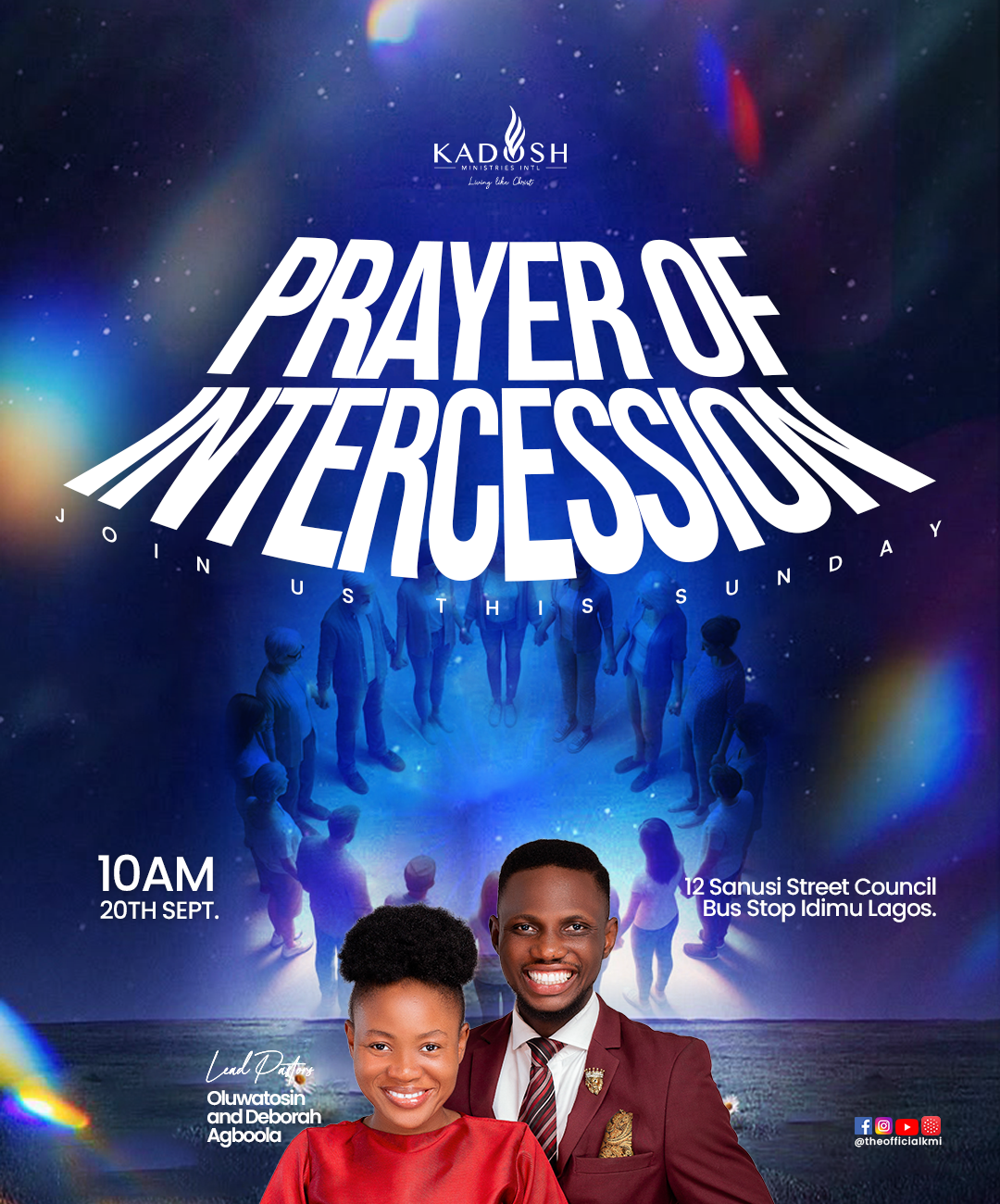
Standing in the Gap and Partnering with Christ in Prayer
Main Text: Hebrews 7:25
“Wherefore he is able also to save them to the uttermost that come unto God by him, seeing he ever liveth to make intercession for them.” — Hebrews 7:25 (KJV)
Introduction
Prayer is one of the greatest privileges and responsibilities of every believer. Beyond presenting our personal needs and desires before God, prayer gives us the opportunity to stand in the gap for others, bringing their needs, challenges, and circumstances before the throne of grace. This expression of prayer is known as intercession.
Intercession is more than mentioning someone’s name in prayer. It is a deliberate act of love, compassion, and spiritual responsibility through which we seek God’s intervention in the lives of others and His purposes on earth.
The Bible presents Jesus Christ as our Great Intercessor, who continually makes intercession for us before the Father. Hebrews 7:25 declares that He is able to save completely those who come to God through Him because He lives forever to intercede for them.
As believers, we are invited to participate in this ministry of intercession. Through Christ, we have been made a royal priesthood, called to pray for others, carry their burdens before God, and become active participants in His divine purposes.
Intercession is not simply about praying for people; it is about standing in the gap for them and partnering with God’s purposes through prayer.
1. What Is Intercession?
Intercession is the act of approaching God on behalf of another person, a group of people, a situation, or a particular purpose. It is prayer that deliberately moves beyond our immediate personal needs to bring the concerns of others before God.
In Ezekiel 22:30, God declares:
“And I sought for a man among them, that should make up the hedge, and stand in the gap before me for the land, that I should not destroy it: but I found none.”
The imagery of standing in the gap presents the intercessor as someone who takes a spiritual position on behalf of others, appealing to God for mercy, intervention, restoration, and the fulfilment of His will.
Throughout Scripture, we find several examples of people who stood in the gap for others:
- Abraham (Genesis 18:16–33): Abraham interceded for Sodom, appealing to God’s justice and mercy concerning the righteous who might be found in the city.
- Moses (Exodus 32:30–32): Moses pleaded with God on behalf of Israel following the people’s sin of idolatry.
- Samuel (1 Samuel 12:23): Samuel regarded continued prayer for God’s people as an essential spiritual responsibility.
- Daniel (Daniel 9:3–19): Daniel fasted, confessed the sins of his people, and earnestly sought God’s mercy and restoration for Jerusalem.
- Jesus Christ (John 17:6–26): Jesus prayed for His disciples and for future believers, demonstrating the depth of His love and concern for those who belong to Him.
These examples reveal that intercession is an expression of spiritual concern for others and a willingness to bring their needs before God.
2. What Intercession Is Not
To understand the true nature of intercession, it is important to distinguish it from certain misconceptions.
Intercession is not complaining about people to God. Rather than approaching God merely to highlight the failures of others, intercession seeks His mercy, transformation, and redemptive purposes in their lives.
Intercession is not a means of controlling God. Prayer is not a technique for compelling God to fulfil our personal desires. Even Jesus, in the Garden of Gethsemane, submitted to the Father’s will, saying, “Not as I will, but as thou wilt” (Matthew 26:39). Genuine intercession involves faith, persistence, and surrender to God’s wisdom.
Intercession is not a replacement for practical action. Prayer should not become an excuse for neglecting opportunities to help those in need. When we have the ability to provide practical assistance, our actions should reflect the compassion we express in prayer (James 2:15–16).
Intercession is not reserved for pastors or church leaders. Every believer, regardless of age, position, or spiritual office, can participate in the ministry of intercession. Scripture calls all believers to offer prayers and intercessions for others (1 Timothy 2:1).
Intercession is not measured by the length of a prayer. The value of intercession is not determined by how long we pray or how eloquently we speak. What matters is the sincerity of our hearts, our alignment with God’s Word, our faith, and our willingness to persevere.
3. Christ, Our Great Intercessor
The foundation of Christian intercession is the continuing ministry of Jesus Christ. Although Christ’s redemptive work on the cross is complete, His heavenly ministry as our Great High Priest continues.
When Jesus declared, “It is finished” (John 19:30), He affirmed the completion of His sacrificial work for sin. However, Scripture also reveals that He continues to intercede for those who come to God through Him.
Hebrews 7:24–25 teaches that Jesus holds an unchangeable priesthood because He lives forever and continually makes intercession for us. Similarly, Romans 8:34 declares that Christ is at the right hand of God, making intercession on our behalf.
Jesus is not merely the One who taught us to pray; He is also the One who continually intercedes for us.
In Luke 22:31–32, Jesus told Peter that He had prayed for him, anticipating the spiritual trial he was about to face. In John 17, Jesus prayed for His disciples and extended His prayer to future believers, demonstrating His enduring concern for His people.
The significance of Christ’s intercession is that our relationship with God does not depend on our own strength or perfection. We have a living High Priest who represents us before the Father and is able to save us completely.
The work of redemption is finished, but the ministry of intercession continues.
4. Christ Is Not Only Our Intercessor; He Is Our Life
One of the profound truths of the Christian faith is that Jesus does not merely intercede for us from a distance; He is also the source of our spiritual life. Our ability to live, serve, and intercede effectively flows from our union with Him.
In John 15:1–8, Jesus describes Himself as the true vine and believers as the branches. He teaches that a branch cannot bear fruit independently of the vine. In the same way, believers cannot produce lasting spiritual fruit apart from Him.
Jesus declares:
“Abide in me, and I in you. As the branch cannot bear fruit of itself, except it abide in the vine; no more can ye, except ye abide in me.” — John 15:4 (KJV)
To abide in Christ means to remain, dwell, and continue in fellowship with Him. It involves allowing His Word to shape our thoughts, His Spirit to guide our lives, and His will to influence our desires.
Jesus further explains in John 15:7 that when we abide in Him and His words abide in us, we can ask according to the desires shaped by that relationship. Our prayers become increasingly aligned with His purposes.
This truth is reinforced in Colossians 3:4, which describes Christ as our life, and Galatians 2:20, where Paul declares that Christ lives in him.
Therefore, intercession is not a spiritual performance driven by human effort. It flows from our union with Christ and our dependence on the Holy Spirit, who helps us in our weakness and enables us to pray according to God’s will (Romans 8:26–27).
The more deeply we abide in Christ, the more our desires, concerns, and prayers are shaped by His Word and purposes.
5. Believers as Partners with Christ in Intercession
Through the finished work of Jesus Christ, believers have been given a new identity and a spiritual responsibility. Scripture describes us as a royal priesthood, called to proclaim God’s praises and serve His purposes.
Revelation 1:5–6 declares that Christ has made us kings and priests unto God. Similarly, 1 Peter 2:9 describes believers as “a chosen generation, a royal priesthood, an holy nation, a peculiar people.”
One of the biblical functions of a priest is to represent people before God. In the Old Testament, priests served as representatives of the people in their worship and sacrifices. Through Jesus Christ, believers now share in a spiritual identity as God’s royal priesthood.
This means intercession is not an exclusive responsibility reserved for a select group of spiritually gifted individuals. It is part of the calling of every believer.
Partnering with Christ in intercession does not mean replacing Him or becoming mediators alongside Him. First Timothy 2:5 clearly establishes that there is one Mediator between God and humanity, Jesus Christ.
Rather, our participation in intercession is made possible through Christ, with the help of the Holy Spirit, as we pray in alignment with God’s purposes.
THE MINISTRY OF INTERCESSION
CHRIST INTERCEDES
Our Great High Priest represents us before the Father.
THE HOLY SPIRIT HELPS
The Spirit strengthens us and helps us pray according to God’s will.
THE BELIEVER PARTICIPATES
We stand in the gap for others and participate in God’s purposes through prayer.
6. The Significance of Being an Intercessor
Intercession is a vital part of the Christian life because it draws us into God’s purposes and develops our spiritual maturity.
It Makes Us Participants in God’s Purposes
God invites His people to pray concerning His plans and purposes on earth. Through intercession, we express our willingness to participate in what He is doing and seek His intervention in the lives of others.
It Develops Spiritual Maturity
Intercession shifts our attention from our personal needs to the needs of others. It moves us beyond asking, “What can God do for me?” to asking, “Lord, what are You doing, and how can I pray according to Your will?”
This develops spiritual sensitivity, humility, compassion, and a deeper understanding of God’s purposes.
It Expresses Love and Compassion
James 5:16 encourages believers to pray for one another. Intercession is a practical expression of Christian love because it demonstrates genuine concern for the spiritual, emotional, and physical well-being of others.
When we carry people before God in prayer, we demonstrate that their needs matter to us and, more importantly, that they matter to God.
It Gives Us a Ministry Beyond the Platform
Intercession is a ministry that does not depend on a title, position, microphone, or public recognition. A child can pray beside their bed, a student can intercede at school, a parent can pray at home, and an elderly believer can intercede from their chair.
The prayer room is also a place of ministry, and the impact of intercession is not limited by public visibility.
It Makes Us Sensitive to the Needs of Others
As we consistently intercede for others, God develops compassion and spiritual sensitivity within us. We begin to see beyond people’s outward circumstances and become more attentive to their deeper needs.
Intercession moves us from simply observing the struggles of others to carrying them before God and seeking ways to express His love in practical ways.
7. How Do We Intercede According to Scripture?
Effective intercession is rooted in our relationship with Christ and guided by the principles of God’s Word.
1. Abide in Christ: Maintain a consistent relationship with Jesus through fellowship, obedience, and dependence on Him (John 15:4–7).
2. Begin with God’s Word: Allow Scripture to shape your understanding of God’s purposes and provide a foundation for your prayers (John 15:7).
3. Pray according to God’s will: Seek to understand God’s desires concerning the people and situations for which you are praying (1 John 5:14).
4. Pray with compassion: Allow the needs of others to move your heart, following the example of Jesus, who was moved with compassion for the people (Matthew 9:36).
5. Pray in faith: Approach God with confidence in His power, wisdom, and faithfulness, trusting Him with the outcome (James 5:16; Mark 11:24).
6. Pray persistently: Remain steadfast in prayer, refusing to become discouraged when answers do not come immediately (Luke 18:1; Colossians 4:2).
7. Pray in the Spirit: Depend on the Holy Spirit, who helps us in our weakness and enables us to pray according to God’s purposes (Ephesians 6:18; Romans 8:26).
8. Pray specifically: Present clear and intentional requests rather than praying only in general terms. For example, pray for a friend to understand God’s love, for a family member to receive wisdom, for a pastor to be strengthened, or for someone to encounter Christ.
Specific prayers help us remain focused and recognise the ways God responds to our requests.
8. What Should We Intercede For?
The Bible provides a broad range of areas in which believers are called to intercede. Our prayers should extend beyond our personal circumstances to embrace the needs of individuals, families, the Church, communities, and nations.
- The salvation of the lost: Pray that people who do not yet know Christ will encounter Him, believe the Gospel, and receive salvation (Romans 10:1).
- Children and young people: Pray for their salvation, spiritual growth, identity in Christ, wisdom, protection, godly friendships, and fulfilment of God’s purposes for their lives.
- Families: Intercede for marriages, parents, children, unity, provision, reconciliation, and spiritual growth.
- The Church: Pray for spiritual maturity, unity, holiness, love, revival, boldness, and effectiveness in fulfilling the Great Commission (Ephesians 6:18).
- Pastors and Gospel workers: Pray for spiritual strength, wisdom, protection, boldness, and opportunities to proclaim the Gospel effectively (Colossians 4:3–4; 2 Thessalonians 3:1).
- Leaders and those in authority: Pray for wisdom, integrity, justice, and the ability to fulfil their responsibilities in ways that promote peace and the well-being of society (1 Timothy 2:1–2).
- The sick and suffering: Pray for healing, comfort, strength, restoration, and God’s sustaining grace in times of difficulty (James 5:14–16).
- Communities and nations: Pray for peace, justice, development, reconciliation, and the welfare of the places where God has positioned us (Jeremiah 29:7).
- God’s kingdom and His will: Above all, pray that God’s kingdom will come and His will be done on earth as it is in heaven (Matthew 6:10).
Intercession should ultimately be governed by a desire to see God’s will accomplished and His name glorified.
9. Who Is God Asking You to Carry in Prayer?
Intercession becomes personal when we begin to identify the people and situations God has placed on our hearts.
There may be someone who needs salvation, a person who is hurting, a family member facing a difficult season, a leader who needs wisdom, or a young person whose future requires spiritual guidance and support.
As we reflect on these needs, we must remember that intercession is not merely an occasional activity but a ministry to which every believer is called.
Since Jesus continually lives to make intercession for us, and we have been made part of His royal priesthood, we too are invited to stand in the gap for others.
The question is not simply whether someone needs prayer. The question is whether we are willing to become the people who pray.
Conclusion: Become an Intercessor
Intercession is a privilege, a responsibility, and an expression of our partnership with Christ in fulfilling God’s purposes. We are not called merely to receive prayers from others but also to become people who faithfully carry the needs of others before God.
Jesus is our Great Intercessor. The Holy Spirit helps us in our weakness, and we are invited to participate in this ministry through prayer, compassion, faith, and obedience.
As we abide in Christ, our hearts become increasingly aligned with His will, our love for others deepens, and our prayers become an expression of His purposes in our lives and in the world.
A CALL TO INTERCESSION
Don’t just be someone who needs prayer. Become someone who prays.
- Don’t only say, “Somebody should pray about this.” Become the somebody.
- Don’t only see the need. Stand in the gap.
- Don’t only carry people’s problems in your mind. Carry them into the presence of God.You are not interceding alone. Jesus is already interceding, the Holy Spirit helps you pray, and you are invited to participate in God’s purposes.
A Prayer of Commitment
Heavenly Father, make me an intercessor. Teach me to see what You see and to love what You love. Give me a heart of compassion for others and help me to pray according to Your Word and Your will. Strengthen me to remain faithful and persistent in prayer, and empower me through Your Holy Spirit to stand in the gap for those who need Your intervention. May my life become an instrument through which Your purposes are fulfilled and Your name is glorified. In Jesus’ name, Amen.
2 thoughts on “The Prayer of Intercession”
nteToDRShPaiWLXyIIEzzGV
JNCpoESDGZBTBJYcFW